

Master the Mental Game with Food That Feeds Your Brain

Perhaps you’ve noticed this pattern. You drill and rec-play systematically each week, yet your talents on the court from day to day are wildly unpredictable. Last Tuesday you were queen of the court, but today you can’t seem to get a ball over the net. What is going on?
It should be no surprise that the barrier may be nutrition-related. Just like steady practice can improve your skills over time, consistently eating foods that feed your brain may make a difference in your speed, coordination, cognition and maybe even your ability to remember whose turn it is to serve the ball.
Start at the Baseline with Healthy Fats
Every single cell in the human body requires fat molecules to exist and function. When it comes to neurological health, consider that the brain itself is nearly 60% fat. There’s no doubt that we need fat in our diet, but the trouble is that we’re not always choosing the right kind of fats to optimize health. Our brains need fat to:
Provide strong but flexible cell structure, allowing neurons to fire quickly for the fastest possible hands.
Support neurotransmitters like dopamine and serotonin, to balance mood and keep our cool when opponents call our “in” ball out.
Protect against inflammation, which can harm brain cells.
Promote healthy aging. Higher omega-3 intake is associated with better cognitive function and memory so you can keep score through the years.
Best shots: Foods high in omega-3 fatty acids including anchovies, salmon, sardines, shrimp, trout, chia seeds, ground flaxseed and walnuts. Other healthy monounsaturated fats come from foods like avocados, olive oil, nuts and seeds.
Play Defense with Antioxidants
Just as we have to defend against that out-of-control banger causing chaos on the court, we need antioxidants to fight free radicals in our bodies. Free radicals are compounds that poach electrons from cells, causing damage. Antioxidants are molecules that block free radicals, protecting cells from inflammation.
If our diets are low in antioxidants, all organs can suffer the consequences, including the brain. Research shows that eating foods high in antioxidants slows aging in the brain, improves cognition, supports memory, reduces “brain fog” and wards off neurodegenerative diseases like dementia.
Best shots: Berries, broccoli, dark leafy greens like kale and spinach, red cabbage, oranges, nuts, seeds, tart cherry juice, concord grape juice, beet juice, pomegranate juice, shrimp, green and black teas, dark chocolate and coffee. (Bonus: Coffee, tea and dark chocolate have the added benefit of caffeine, which has been shown to improve athletic performance by boosting mental alertness. Too much caffeine can be unsafe, however, so limit your daily intake to less than 400 mg, or about four cups of coffee.)
Complex Carbs
Carbohydrates are the favorite energy source for the brain. It’s an important macronutrient for athletes, especially when we need that fast energy for quick thinking on the court.
Choosing complex carbs like those found in whole grains can release the energy steadily into the body, preventing blood sugar spikes that can cause damage over time. Fruit is generally full of simple carbohydrates offering some faster energy, but the fiber in fruit helps slow digestion and ease spikes.
Best shots: Whole grains like oatmeal, wheat, rye, barley, beans, peas, lentils and whole fruit.
Clear the Fog with Hydration
Even if you have the most nutrient-dense eating habits, your brain won’t be at its best if you’re dehydrated. Even mild dehydration can significantly impair your short-term memory and ability to focus.
Best shots: Water. If you’re sweating for more than an hour, electrolyte drinks are important.
Don’t Forget Your Gut Health
You may have heard about the gut-brain axis, the human body’s communication system connecting the gut to the brain. Studies show that if we take care of our gut microbiome, it can offer symbiotic brain benefits. This includes making serotonin, a neurotransmitter that helps regulate mood, sleep and focus.
Best shots: Probiotic foods that contain live, good bacteria, which include kefir, miso, yogurt, sauerkraut and kimchi. Also prebiotic, high-fiber foods that feed the good bacteria, like garlic, onions, jicama, asparagus, oats, greener bananas, wheat bran, avocado and cacao.
So, remember: Consistently playing your best game begins in the kitchen with healthy fats, antioxidants, adequate hydration and a healthy gut.
See you on the court, pickleball friends! •
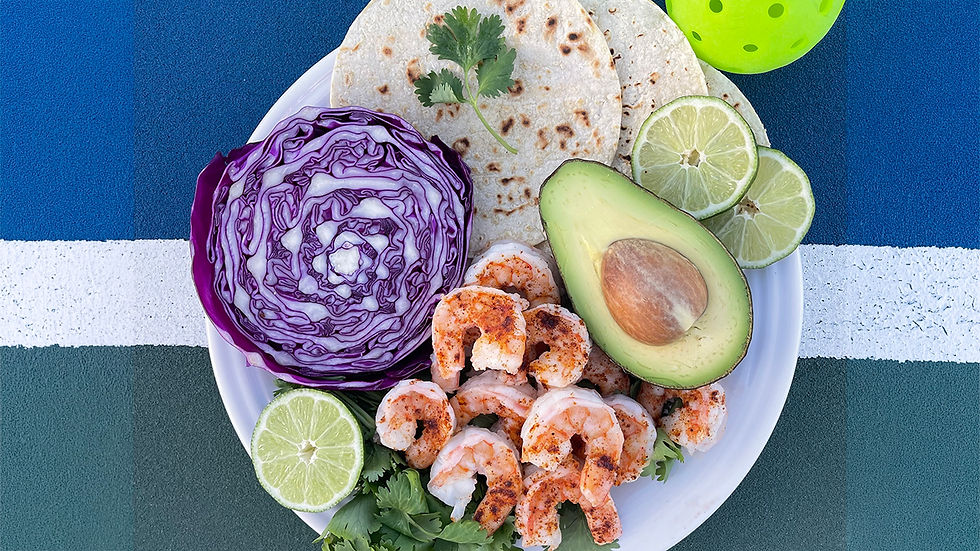
Shrimp Summer Tacos
This meal is packed with brain-supporting foods, including healthy fats from shrimp and avocados, antioxidants from cabbage and cilantro, and complex carbs from the corn tortillas. Choose the toppings you enjoy to make it your own!
Ingredients:
8 corn tortillas
1 lb large shrimp, peeled and deveined
2 cloves minced garlic
½ teaspoon salt
¼ teaspoon chili powder
¼ teaspoon cumin
¼ teaspoon cayenne pepper (optional)
1 tablespoon avocado oil
Topping Ideas: Shredded cabbage, cilantro, chopped onions, sliced avocado, lime wedges, and cheese like Monterey Jack or cotija
Cilantro-Lime Sauce:
1 5-oz container plain Greek yogurt
Juice from ½ lime
¼ cup fresh cilantro, finely chopped
¼ teaspoon garlic salt
Pinch of cayenne pepper (optional)
Directions:
In a small bowl, mix the cilantro-lime sauce ingredients together. Refrigerate sauce until you’re ready to eat.
Place the shrimp in a medium bowl. Sprinkle garlic, salt, chili powder, cumin and pepper over the shrimp. Mix with your hands to combine.
Heat avocado oil in a sauté pan on medium. When oil is hot, sauté shrimp in a single layer for about 2 minutes on each side, until shrimp turns pink and white, without the raw, blue-gray hue.
Serve shrimp on warmed tortillas with your toppings of choice and cilantro-lime sauce. Enjoy!
Brandi Givens has been a registered dietitian since 2010, and earned a personal trainer certification in 2024. Questions can be posted to her blog at brandigivensrd.com.


Comments